
Residential Spray Foam Insulation in Manhattan, KS
Whether it's a drafty attic, an addition that never quite matches the rest of the house, or a garage that's an icebox in January, we spray foam insulation into the parts of a home that batts and blown-in fiber never fully seal. One visit, one crew, done right.
Signs Your Home Could Use Spray Foam
Most homeowners don't call us because they woke up thinking about R-values. They call because something in the house is bugging them. If any of this sounds familiar, spray foam usually fixes it.
The Furnace Never Shuts Off
If your system runs constantly just to hold a temperature, air is leaking out faster than it should. Spray foam seals that leak instead of just slowing it down.
One Room Is Always Off
A bonus room, garage, or addition that's always hotter or colder than the rest of the house usually means the original insulation job left gaps.
Ice Dams Along the Roof Edge
Heat escaping through an under-insulated attic melts snow that refreezes at the eaves. A properly sealed attic is usually the fix, not a new roof.
Cold Floors Above a Crawl Space
Floors that stay cold even with the heat running usually point to an uninsulated or poorly sealed crawl space below.
Where We Spray Foam in Your Home
Every part of a house loses heat differently, so we don't treat an attic the same way we treat a rim joist. Here's where this comes up most.
Attics
Sprayed at the roofline or the attic floor, depending on whether you want a conditioned attic or a vented one.
Learn More →While retrofitting existing attics saves energy, building a custom home gives you a clean slate to engineer maximum efficiency from day one. From custom floor plans in Manhattan to rural builds across the region, our team ensures your framing passes local Kansas energy codes on the first inspection. Check out our approach to new construction insulation to see how we seal new builds for lifetime performance.
Exterior Walls
New construction, additions, and open-wall remodels get foam sprayed directly into the stud bays before drywall goes up.
Learn More →Garages & Additions
Detached garages, shops, and additions insulated as their own space so they hold a comfortable temperature year-round.
Learn More →Rim Joists
The band around the top of your foundation is one of the leakiest spots in most houses — and one of the easiest to fix right.
Learn More →Have a crawl space that needs sealing instead? See our crawl space encapsulation services →
See a Residential Job From Start to Finish
This is a garage build across three stages — bare framing, mid-job coverage, and a finished wall — so you can see exactly what a job looks like at each step.
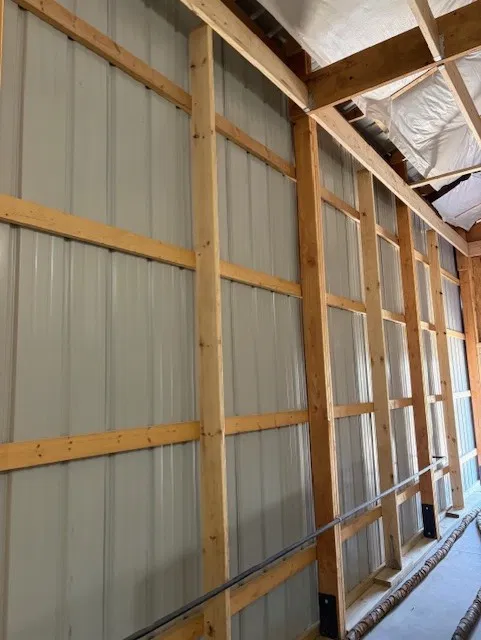
Framed and Ready
Studs up, metal wall panels in, roof framing exposed. This is the stage where we walk the whole space and plan out coverage before any foam goes on.
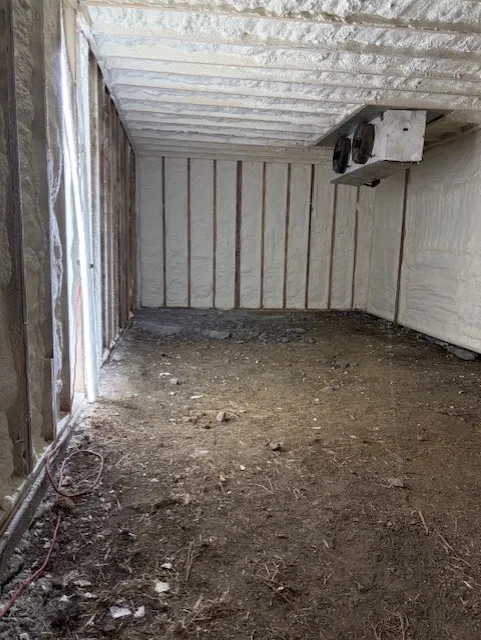
Ceiling First, Then Walls
We typically spray the ceiling before the walls so overspray falls where it can still be cleaned up, not onto foam that's already finished.
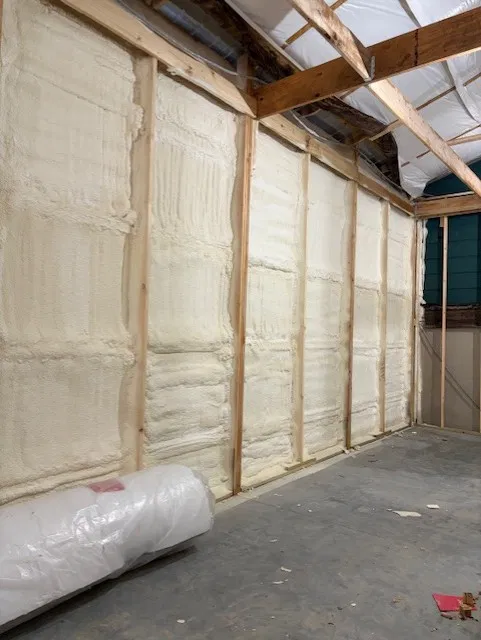
Every Bay, Wall to Wall
The finished wall — every stud bay filled edge to edge, with no gaps at the corners or along the top and bottom plates.
What to Expect When We Spray Your Home
-
1
Walkthrough & Prep
We check for wiring and plumbing in the walls, mask off anything nearby that shouldn't get overspray, and cover flooring where needed.
-
2
Spraying
Foam goes on in careful passes to the thickness your project calls for. Most residential jobs are done in a single day.
-
3
Cure & Re-Entry Time
We follow manufacturer re-entry times before anyone, including pets, goes back into a freshly sprayed space without ventilation.
-
4
Trim & Cleanup
We trim foam flush wherever drywall or trim needs to sit against it, and we haul off our own scrap before we leave.
Residential Spray Foam: Quick Answers
Is spray foam insulation safe?
Can you spray foam over existing insulation?
How much spray foam insulation do I need?
Do I need a permit for spray foam insulation?
Is spray foam insulation guaranteed?
Ready for a More Comfortable Home?
Tell us a little about your project and we'll call you back — usually the same business day.